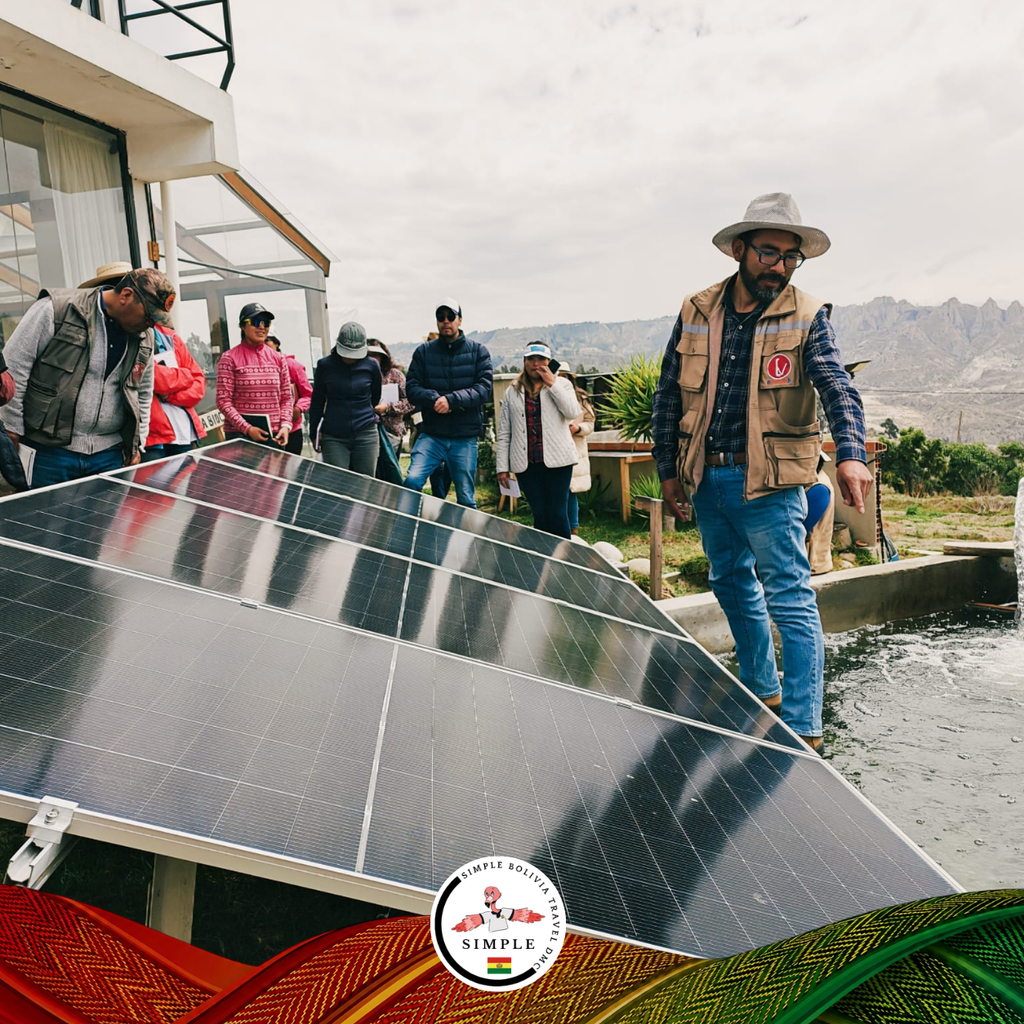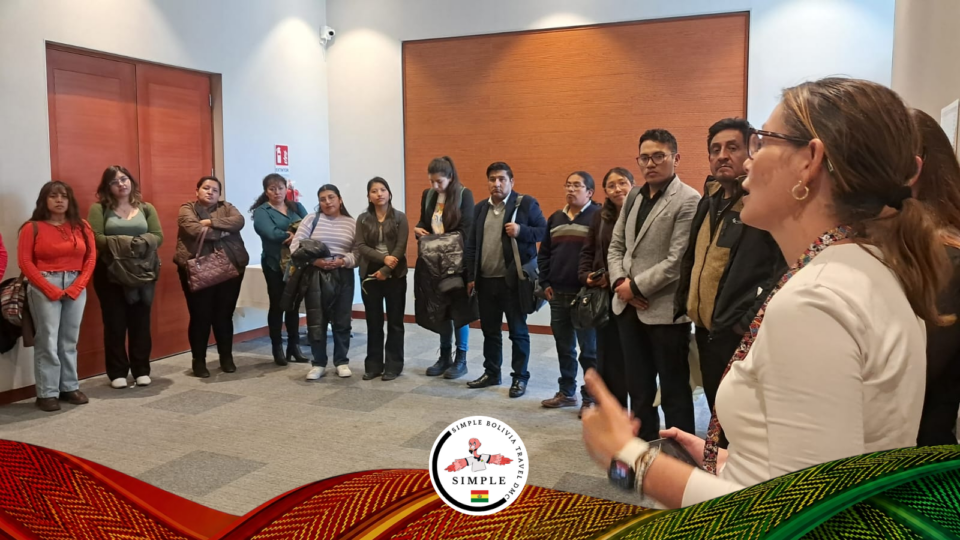
Sustainability in tourism requires much more than good intentions. It means learning, questioning our current practices and exploring alternatives that can help develop tourism in a more responsible way toward people, communities and the environment. As part of our ongoing Sustainable Tourism training, we participated in the second module of the program, an experience that allowed us to explore the potential of solar energy and its practical applications.
The session took place at La Casa Solar – Achocalla, a hands-on learning space where we were introduced to different solutions based on the use of solar energy. During the experience, we learned about alternatives for generating electricity, heating water, pumping water and providing lighting, gaining a better understanding of how a clean and renewable energy source can be applied in different settings.
Why does solar energy matter when we talk about sustainable tourism?
Tourism depends directly on the natural and cultural resources of destinations. Energy, meanwhile, is present throughout almost every part of tourism activity: from accommodation and restaurants to lighting, transportation, communication and the operation of different tourism services.
In this context, exploring renewable energy sources such as solar power can help reduce dependence on conventional energy sources and support more efficient operating models. Solar energy makes use of a naturally available resource and, during electricity generation, does not produce direct greenhouse gas emissions in the same way that burning fossil fuels does.
Its applications are also diverse. Solar photovoltaic systems can generate electricity, while other technologies can use sunlight to heat water. In certain contexts, solar solutions can also support water pumping and lighting, offering particularly valuable alternatives for communities and tourism businesses located in areas where access to conventional energy can be more challenging.
An opportunity for destinations and communities
The adoption of sustainable solutions should not be viewed solely as a technological issue. It can also become an opportunity to strengthen the resilience and autonomy of communities and tourism businesses.
In rural destinations and areas located far from major urban centers, solar energy solutions can complement other energy sources and help provide access to essential services. For the tourism sector, this can create new opportunities to improve facilities, optimize the use of resources and develop experiences that are more respectful of their surroundings.
However, sustainability is not simply about installing solar panels. Each solution needs to respond to the specific characteristics of a destination, including its needs, available resources and maintenance possibilities. This is why education and training are essential to making informed decisions and turning ideas into viable projects.
Learning in order to apply
One of the most important lessons from this experience is that sustainability is built progressively. Learning about new technologies, understanding their benefits and limitations, and considering how they can be applied in different contexts allows us to broaden our perspective on the future of tourism.
For those of us working in tourism operations, this knowledge also provides an opportunity to better understand the challenges faced by destinations and our local partners. Sustainability requires collaboration among businesses, communities, institutions and professionals who are willing to adopt new practices and share knowledge.
At Simple Bolivia Travel DMC, we continue strengthening our knowledge and training as part of our commitment to more responsible tourism. We believe that every learning experience can become an opportunity to improve the way we operate and contribute positively to the destinations where we work.
Our journey toward more sustainable tourism continues: learning, connecting knowledge and exploring new ways to create a positive impact.