Day 1 – Salta
Arrival and transfer to Hotel Caseros. Check in and have free time to rest. Salta is known for its hospitality, its people, and the colonial architecture of its buildings.
Day 2 – Salta – Cachi – Seclantas – Molinos
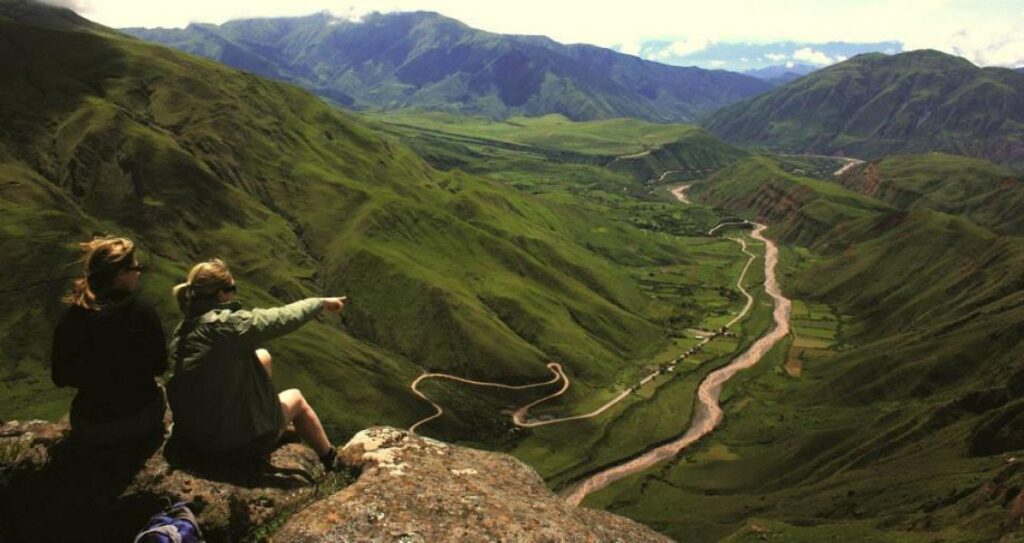
Departure at 7:45 a.m. from Salta city toward Cachi (163 km). The journey begins on National Route 68 through the Lerma Valley, then continues on Provincial Route 33, which takes you through diverse landscapes: mountains, gorges, rivers, and forests.
Ascend the majestic Cuesta del Obispo (Bishop’s Slope), enjoying impressive panoramic views. As we continue, we’ll reach Los Cardones National Park and follow the historic Recta de Tin Tin, an ancient road once used by the Incas.
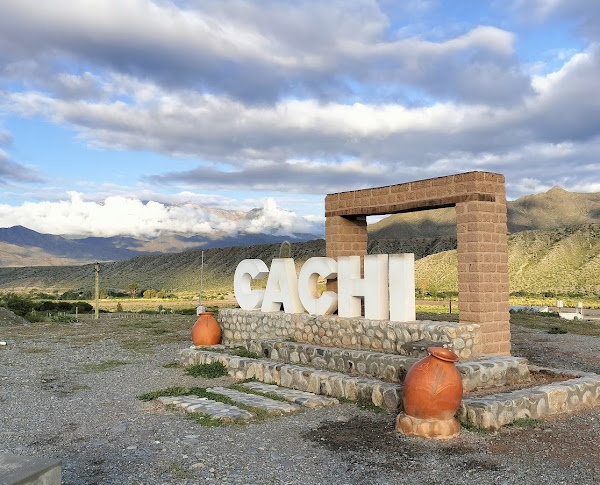
We expect to arrive in Cachi around 11:00 a.m. From here, you can admire the snow-capped peak of Cachi, which reaches 6,380 meters above sea level. After a brief visit, we’ll continue to Seclantas (30 km), a picturesque village. The journey to Seclantas offers spectacular views of the mountainous landscapes of the Calchaquí Valleys. As you go, you’ll see hillsides covered in cacti and rock formations that highlight the beauty of the region.
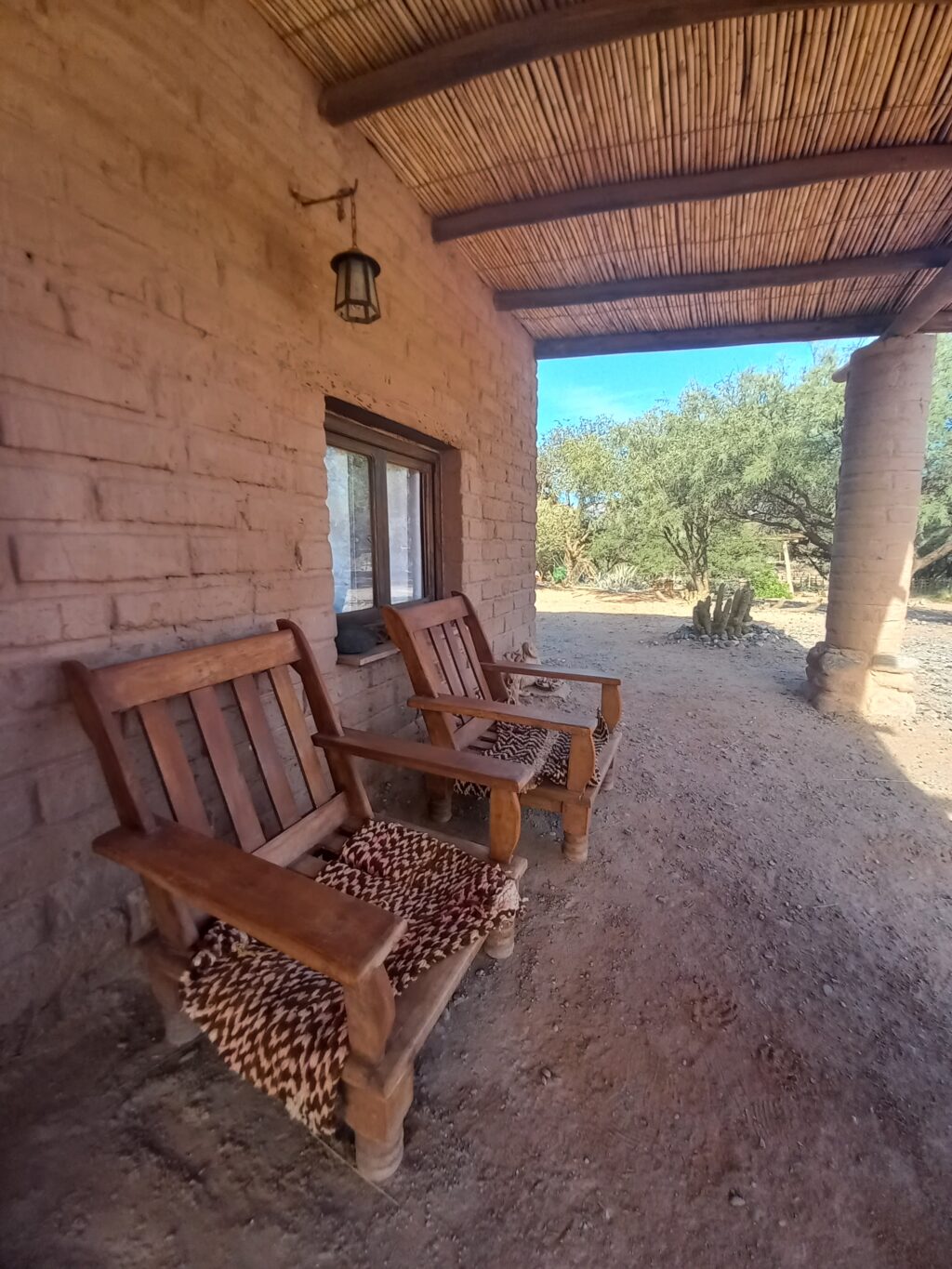
Upon arrival in Seclantas, you’ll find a town known for its ancient weaving traditions and for keeping traditional crafts alive. The village is a peaceful spot with dirt roads, adobe houses, and an atmosphere that invites tranquility.
Lunch: Enjoy a unique culinary experience at Casa Díaz, where Pío and the cooks will be waiting for us. This highly-regarded restaurant specializes in local cuisine and is recognized by Slow Food, an international organization that promotes artisanal, local, and sustainable food. Here, you can savor typical regional dishes prepared with fresh, traditional ingredients. The welcoming atmosphere and focus on local food culture make this an unforgettable stop on your trip. In the afternoon, there will be free time to explore Seclantas, with the option to visit local artisan workshops that produce the famous ponchos salteños. This area is known as the birthplace of this textile tradition, especially the red ponchos worn by the gauchos of Güemes.
Next, we’ll continue on Route 40 toward Molinos, another picturesque town located about 20 km away, in the heart of the Calchaquí Valleys. The journey between Seclantas and Molinos takes place on a gravel road surrounded by spectacular Andean landscapes. Along the way, you’ll pass through arid areas with reddish and ocher-toned mountains, dotted with cacti. In some sections, you can see gorges and small rivers winding through the mountains.
As we approach Molinos, the scenery subtly changes, with more vegetation appearing along the banks of the Calchaquí River, which follows part of the road. The route offers natural viewpoints from which you can admire the grandeur of the valley and its mountains.
Arrival in Molinos: This charming village, founded in the 17th century, preserves its colonial essence. Upon arrival, you’ll be impressed by the Church of San Pedro de Nolasco de los Molinos, an architectural gem built in 1639, and the old hacienda that was the residence of Salta’s last royalist governor, Nicolás Severo de Isasmendi. Molinos is also known for its wine production, particularly for the high-altitude wines from local wineries.
This day focuses on a combination of natural landscapes, cultural traditions, and local gastronomy, highlighting the richness of the Calchaquí Valleys.

Day 3 – Molinos – Calchaquí Valleys – Cafayate
Enjoy breakfast and continue your journey departing from Molinos. From here, we’ll take National Route 40, which connects us to the region’s different stunning landscapes. This route is famous not only for linking towns but also for the diverse and colorful geography it offers travelers.
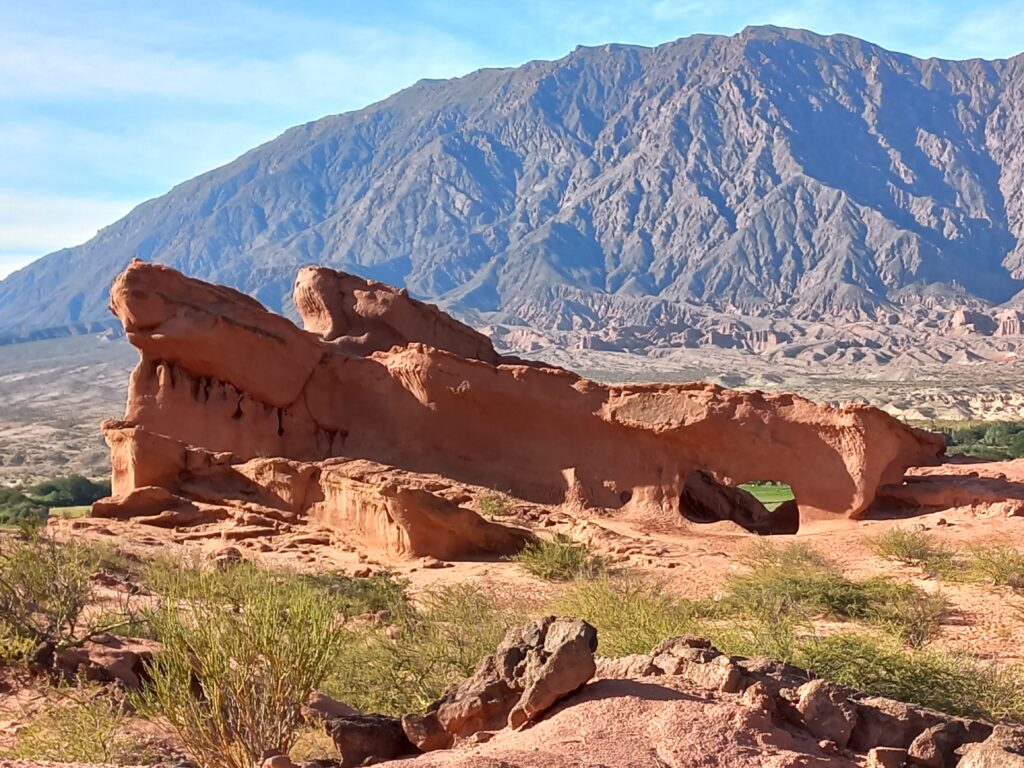
As we move on, we’ll reach one of the most spectacular points of the trip: the Quebrada de las Flechas (Gorge of the Arrows), in the heart of the Calchaquí Valleys and part of the Angastaco Provincial Natural Monument. Here, the landscape changes dramatically, with sharp, pointed rock formations that rise toward the sky like arrows, creating an almost surreal scene. The road zigzags through narrow passes and gorges, offering impressive views. This is one of the most distinctive and photogenic spots on the route.
After crossing the Quebrada de las Flechas, we’ll pass through the towns of Animaná and San Carlos, two peaceful localities steeped in history and tradition, surrounded by vineyards and cultivated fields.
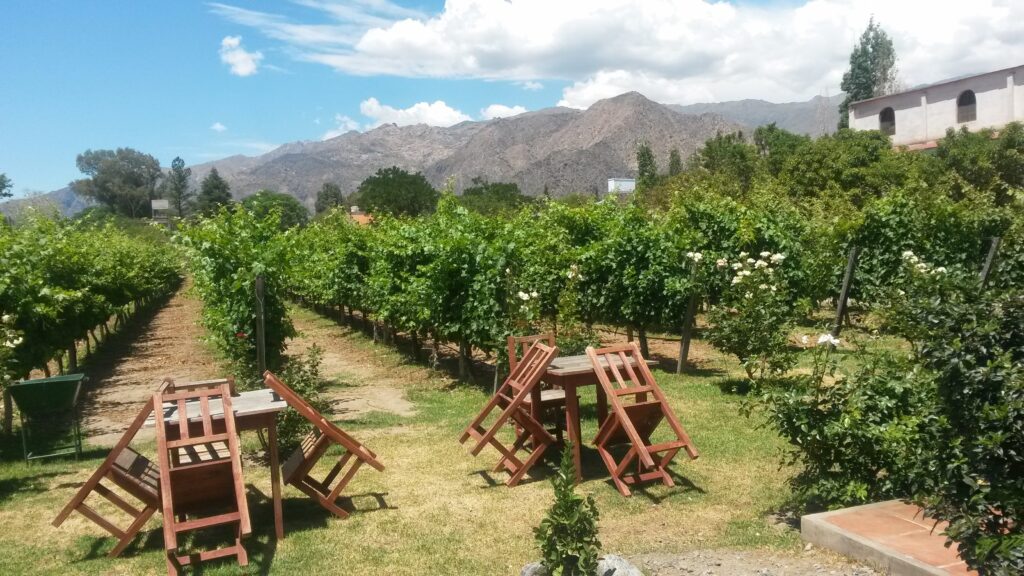
We’ll then arrive in Cafayate, famous for its high-altitude wineries and wines, especially Torrontés. It’s an excellent place to relax after a day full of nature and culture. We are scheduled to arrive around noon to visit a winery where we’ll have lunch, a true Salta gastronomic experience. To further enrich the visit, we offer culinary options that highlight the region’s authentic flavors, such as a “bodeguero” barbecue (winery barbecue), which combines our traditional warmth with the best wines from the winery. You’ll get to enjoy Carmen’s famous empanadas.
(For groups, we can arrange an empanada-making class with Carmen for a unique and fun experience).
Note: Depending on the travelers’ profile and group size, we can opt for a winery with a gourmet lunch and wine pairing or more personalized experiences, including staying at the same Wine Resort.
After lunch, you’ll have free time to relax or explore the surroundings.
This tour combines stunning landscapes like the Quebrada de las Flechas with cultural and gastronomic experiences, creating a journey full of contrasts and discoveries along Route 40 in the Calchaquí Valleys.
Day 4 – Cafayate – Quebrada de las Conchas – Salta
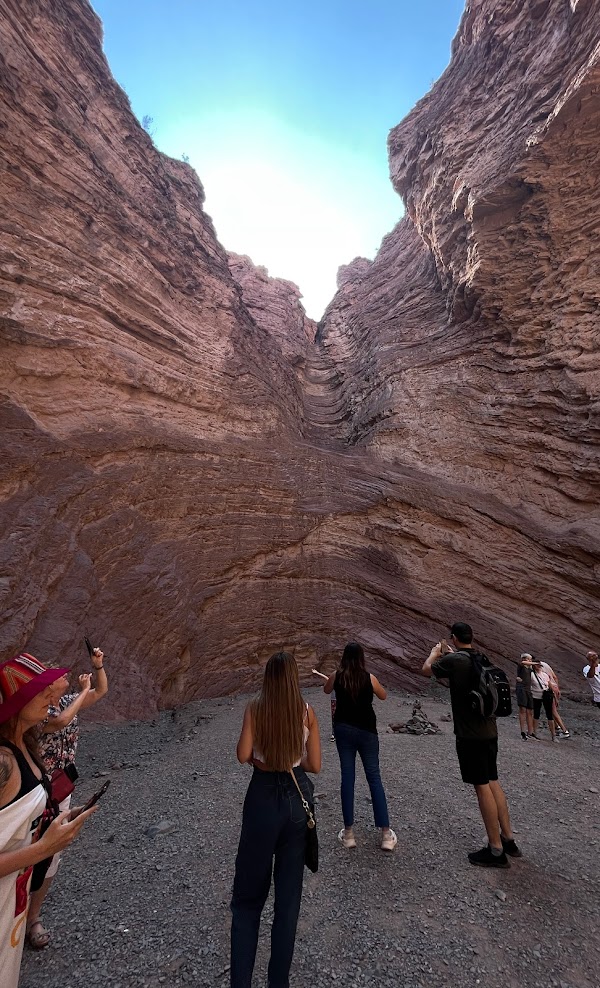
After breakfast, we’ll depart from Cafayate on National Route 68, traveling through the stunning reddish landscape of the Quebrada de las Conchas (Shells Gorge), one of the most beautiful scenic stretches in northern Argentina. As we drive, the contrast of colors, rock formations, and the vegetation of the Calchaquí Valley will accompany us.
Our first and most impressive stop will be at the Garganta del Diablo (Devil’s Throat), a deep crack carved by erosion into sandstone rock, with vertical walls that rise like a natural amphitheater. It’s a breathtaking place that offers a chance for a short walk into its interior.
Just a few minutes away, we’ll stop at the famous Amphitheater, a semicircular formation with great acoustics, surrounded by high stone walls. Sometimes, local musicians perform folk songs, enhancing the magic of the place.
We’ll then get back on the road toward Salta, passing through traditional towns like Alemanía, La Viña, and Cerrillos, where the landscape gradually changes back to the green of the Lerma Valley. Upon arrival in Salta, you’ll check into your hotel and have the rest of the day free.
This is a scenic journey through the Quebrada de las Conchas, with stops at two natural gems: the imposing Garganta del Diablo and the magical Amphitheater.
Day 5 – Salta – Purmamarca – Maimará – Tilcara
After breakfast, we’ll begin our excursion, departing from the city of Salta (1,187 meters above sea level). We’ll take National Route 9 heading north, traveling along a winding corniche road surrounded by lush subtropical forest. As we cross into the province of Jujuy, we’ll enter the Quebrada de Humahuaca, a UNESCO World Heritage site.
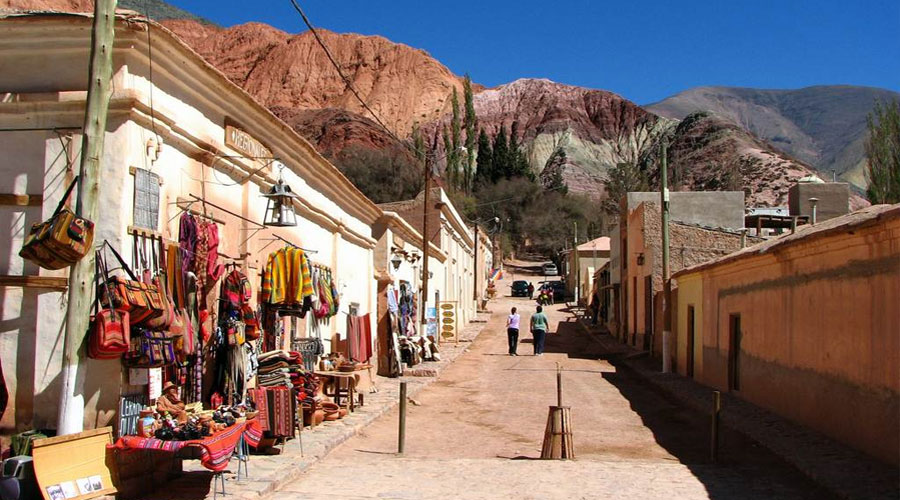
The road continues toward the Angosto de Jaire, a narrow and scenic pass that marks the natural entrance to the gorge. From there, we’ll arrive in Purmamarca, a charming Andean town located at the foot of the Hill of Seven Colors. Its cobblestone streets, adobe architecture, and local handicrafts welcome you to the heart of the gorge.
Following the route, we’ll visit the historic Posta de Hornillos, a former stop on the Royal Road and now a museum that preserves period furniture, documents, and objects that recall the passage of independence armies and merchants.
Finally, the tour culminates in Maimará, a town characterized by its colorful Painter’s Palette (Paleta del Pintor), a geological formation of vibrant colors that dominates the landscape, along with traditional agricultural terraces and a tranquil atmosphere. It’s an ideal place to connect with the local culture and enjoy the natural beauty of the surroundings.
There will be free time, depending on the travelers’ profile. Optional activities can include walks through the agricultural terraces, a traditional weaving or pottery workshop with the community, or a tasting of high-altitude wines.
We anticipate arriving in Tilcara or Huacalera around 4 or 5 p.m.

Day 6 – Tilcara or Huacalera – Salinas Grandes – Barrancas – Tilcara or Huacalera
After an early breakfast, we’ll depart and ascend the Cuesta de Lipán, one of the most stunning scenic routes in northern Argentina. After a beautiful drive through mountains, cacti, and high-altitude curves, we’ll reach the Salinas Grandes salt flat, a vast expanse of 212 km². This site is impressive not just for its size but for its cultural significance.
We’ll visit the pools where salt has been harvested artisanally for centuries, and see the “ojos del salar” (eyes of the salt flat), which are small, natural lagoons in the middle of the salt flat. Those who wish can take a bicycle tour across the salt flat with vehicle support available if needed. Once there, you’ll have the opportunity to learn about and experience the process of artisanal salt harvesting firsthand from the communities who have perfected this technique over generations. (The total distance to be covered on the salt flat is 14 km).
After lunch, we’ll continue toward the town of Barrancas, a hidden gem of the region, where a community-guided archaeological experience awaits us. We’ll visit the Cultural and Archaeological Interpretation Center (CIC) and tour the main sites in the area. We’ll see petroglyphs and cave paintings that tell the story of the Andean worldview, explore pre-Hispanic ruins that are vestiges of ancient settlements, and see the mythical Piedra Mapa (Map Stone), an ancestral engraving believed to represent the original territory.
Day 7 – Tilcara – Hornocal – Yavi
After breakfast, we’ll depart in the morning with our luggage, heading north along the Quebrada de Humahuaca on National Route 9. Along the way, we’ll make thematic stops at some of the valley’s most iconic sites.
We’ll visit the Tropic of Capricorn, where an exact marker indicates this imaginary line. We’ll see Yacoraite Hill, also known as the “Pollerita Kolla” (Kolla Skirt) for its stepped shapes that resemble traditional Andean skirts. We’ll also stop at the charming town of Uquía, which is known for its 17th-century church that houses valuable paintings of arcabucero angels from the Cuzco school.
Upon arriving in the town of Humahuaca, we’ll pause for lunch at a local restaurant and then enjoy a short walk through its historic center. We’ll explore its stone streets, the central plaza, and the impressive Monument to the Heroes of Independence, which pays tribute to the northern Argentine struggle for freedom.
From there, we’ll begin the ascent to the magnificent Hornocal Viewpoint, located at 4,350 meters above sea level. This mountain, known as the “Hill of 14 Colors,” offers a majestic view of the multicolored geological formations that characterize the region. We’ll spend a reasonable amount of time at the viewpoint to enjoy the landscape and acclimate to the altitude.
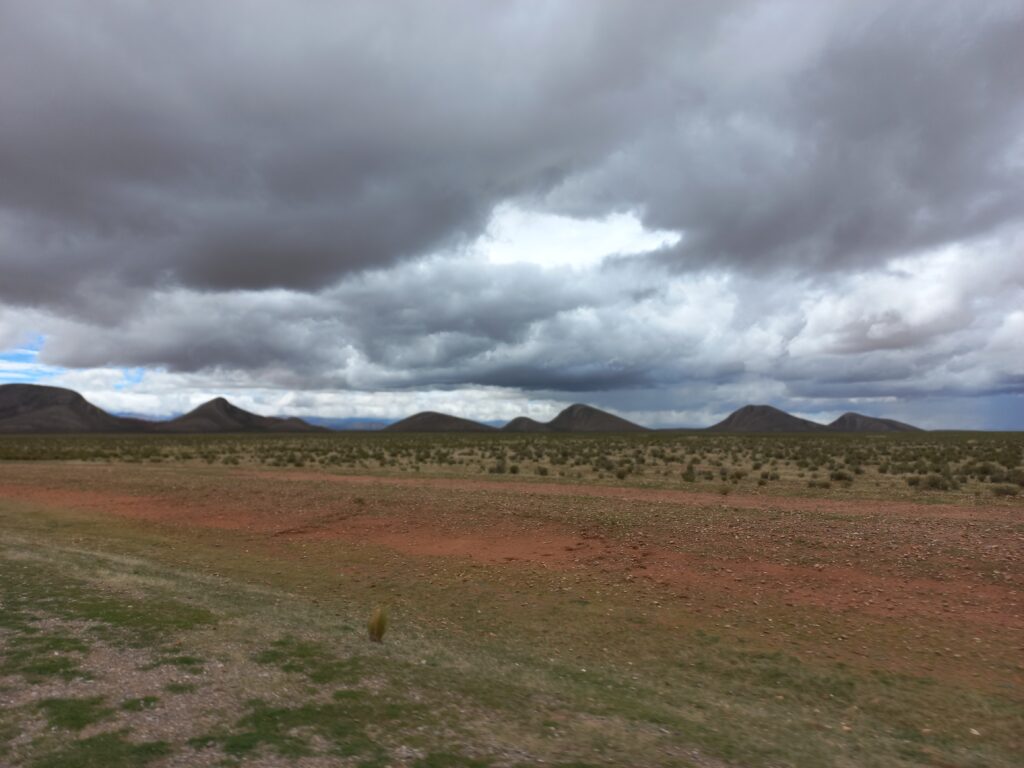
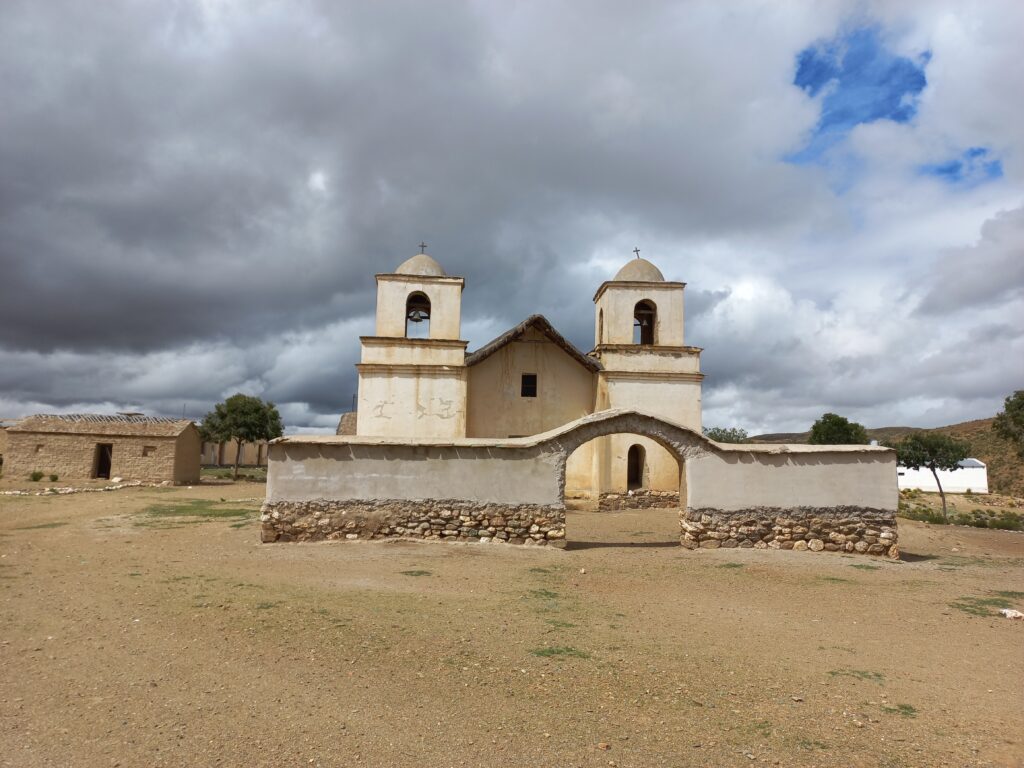
Afterwards, we’ll continue our journey, leaving the colorful gorge behind as we head north into the Jujuy high plains. In this final stretch, the landscape changes, becoming more open, silent, and arid. We’ll eventually reach Yavi, a border area where Andean culture and colonial history meet in their purest form. Upon arrival, you’ll have free time before dinner and overnight stay.
Day 8 – Yavi – La Quiaca – Villazón – Tupiza – Uyuni
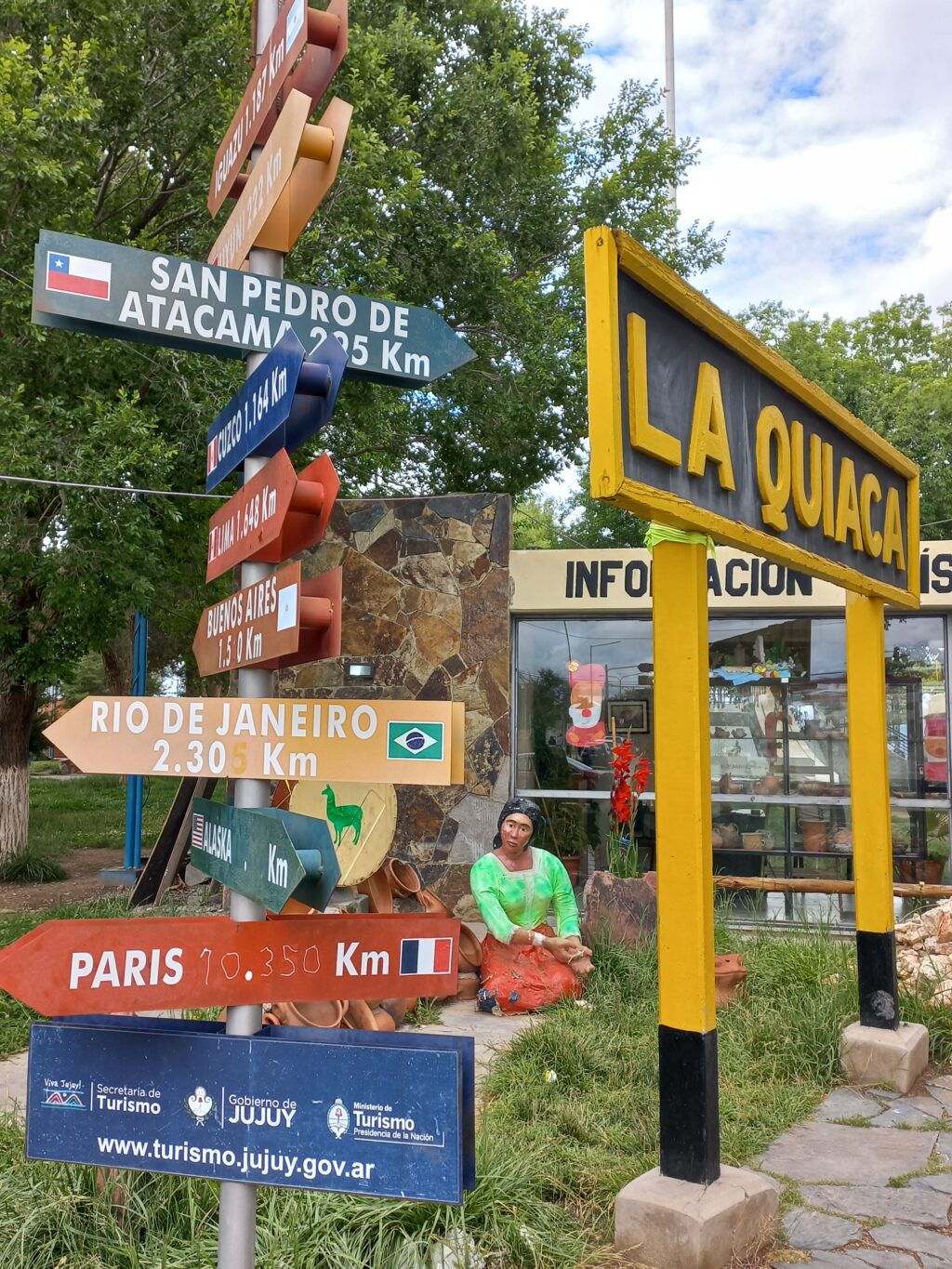
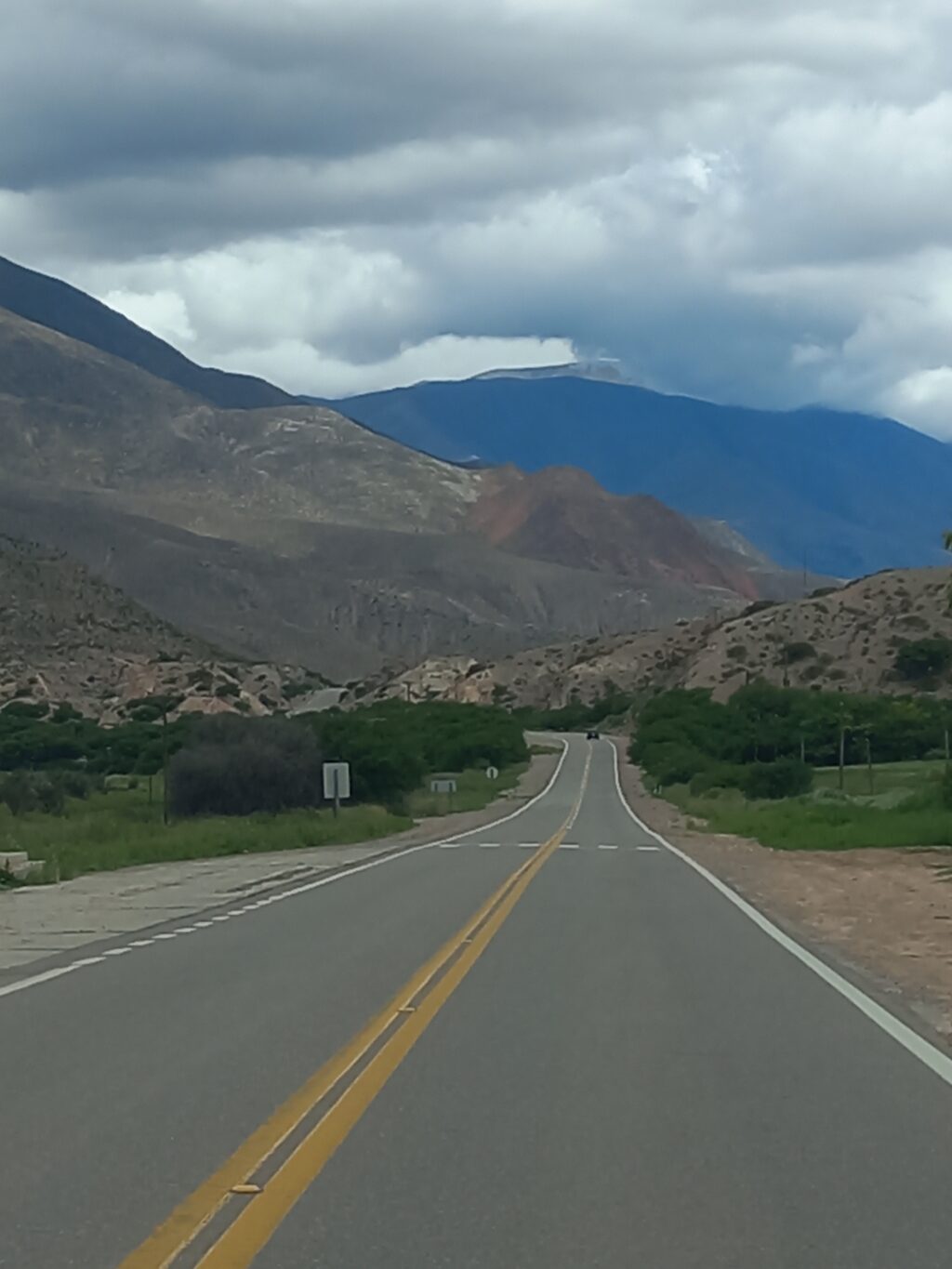
After an early breakfast, we’ll continue our journey to La Quiaca to complete the Argentine immigration procedures. With assistance at the border crossing, we estimate the process will take about 5 to 20 minutes. After making contact with the Simple Bolivia guide, you will cross the Horacio Guzmán International Bridge, which is only 31 meters long and spans the La Quiaca River, connecting both cities. This concludes the services.
Upon arriving in Villazón, after completing the entry procedures into Bolivia (which may take 10 to 30 minutes), you’ll continue the journey to Tupiza for lunch. Tupiza is located in an agricultural valley, with the Tupiza River running between mountains and canyons. The surroundings are dominated by reddish rock formations, gorges, and canyons, creating a landscape reminiscent of the American Wild West. You’ll get to see Bolivian rural life up close. It is a town with a history of mining, agriculture, and legends.
After lunch, we’ll depart for the highly-anticipated high-altitude city of Uyuni, situated at 3,660 meters above sea level. Upon arrival, we’ll check into your accommodation in this small town of about 24,000 inhabitants. It’s a genuine town with a frontier feel and is the vital starting point for the iconic Uyuni Salt Flat.
Includes: Private 4×4 Jeep, lunch, guide, dinner, and accommodation at Hotel Palacio de Sal, Luna Salada, or Cristal Samaña (Standard Double Room).
Day 9 – Uyuni Salt Flat + Sunset
After breakfast, we’ll begin our journey to the Uyuni Salt Flat, the largest continuous high-altitude salt desert in the world, covering an area of over 10,500 square kilometers. Located in southwestern Bolivia, this immense white sea is impressive for its silence, purity, and sheer size. About 40,000 years ago, the area was part of a giant prehistoric lake called Lake Minchín. When it evaporated, it left behind several salt flats, with Uyuni being the largest. Underneath its surface is a thick salt crust with natural hexagonal patterns that make it unique. It is one of the most extraordinary landscapes on the planet.
We’ll start with a visit to the Colchani handicraft market, where you’ll find stores selling salt crafts and textiles made from llama and alpaca wool. You’ll also see the traditional salt-processing methods.
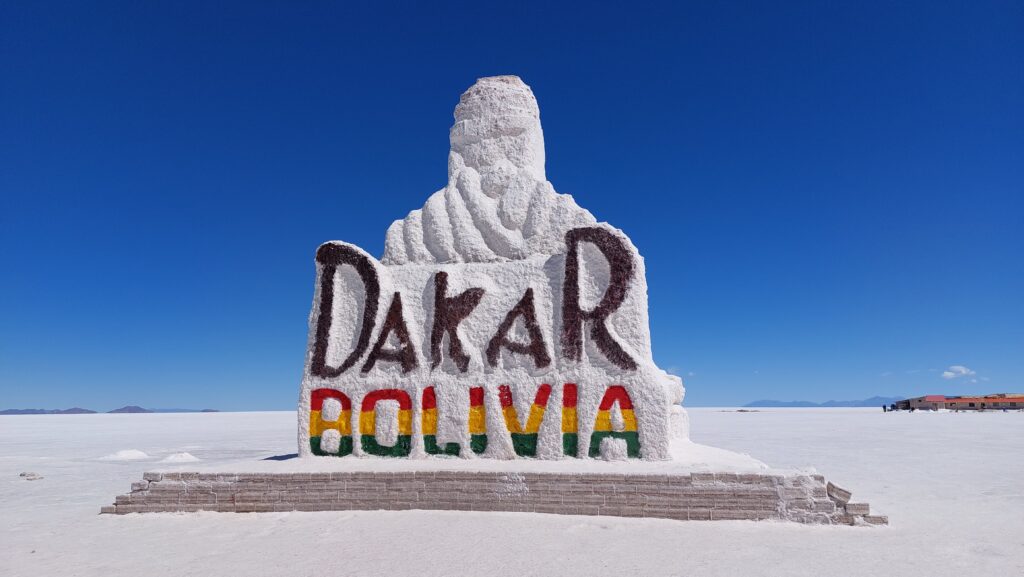
We’ll continue to the salt mounds, the “ojos de agua” (salt water springs), the Dakar Rally monument, and the Plaza of World Flags. Next, we’ll visit the first Salt Hotel, which now serves as a museum and restaurant, where we’ll have lunch if it’s cold and windy. Otherwise, lunch will be a picnic right on the salt flat with colorful tablecloths and pillows. After lunch, we’ll visit Incahuasi Island, home to giant cacti. We’ll take a walk to the top of the island, from where you can see the entire Uyuni Salt Flat. On the salt flat itself, you’ll have the chance to take incredible perspective photos and film exclusive, surreal videos.
We’ll return across the salt flat to watch the sunset (with a mirror effect during the rainy season). At a convenient time, we’ll return to the hotel.
Includes: Private Uyuni Salt Flat excursion (4×4 Jeep, guide, entrance fees, lunch, sunset + snacks and wine), dinner, and accommodation at Hotel Palacio de Sal, Luna Salada, or Cristal Samaña (Standard Double Room).



Day 10 – Uyuni – La Paz
At the indicated time, transfer to the airport to take your flight to the city of La Paz (flight not included). Upon arrival in La Paz, you will be transferred to your hotel.
In the afternoon, we will continue exploring this wonderful city and appreciate its cultural, historical, architectural, and natural richness. We’ll visit the main square, Plaza Pedro Domingo Murillo, the Metropolitan Cathedral, the National Congress, and the Government Palace (exterior view). We’ll also visit the Precious Metals Museum (closed on Mondays) and the Killi Killi viewpoint, where you’ll have a panoramic view of the city of La Paz and the snow-capped Illimani mountain, as well as a replica of the Tiwanaku semi-subterranean temple. Then we’ll travel to the southern zone to observe the change in climate and house construction styles before heading to the Valley of the Moon (Valle de la Luna). This place will challenge your imagination, making you feel as if you are on a small lunar landscape; its shapes are the result of erosion and resemble volcanic craters. You’ll also have the opportunity to ride one of our city’s cable cars and finish by visiting the Witches’ Market, where locals buy necessary items for ceremonies or rituals like Challa and offerings to the Pachamama (Mother Earth). Return to the hotel to rest.
Includes: Transfer Out (without guide), Transfer In (with guide), City Tour & Valley of the Moon (private transport, guide, entrance fees, 2-line cable car ticket), accommodation at Hotel Ritz or Illampu (Standard Double Room).


Day 11 – Tiwanaku – Copacabana
After breakfast, we’ll begin your majestic adventure with a one-and-a-half-hour drive on a fully paved road to explore Tiwanaku, known as the “Cradle of American Civilization.” This archaeological site is one of the oldest of the Andean cultures, and its ruins are impressive due to their monumental size and the perfection of their construction and decorative techniques.
We’ll visit the following attractions: the Tiwanaku museums and several ruins, including the Akapana Pyramid, the Kalasasaya Temple, the Gateway of the Sun, the Fraile and Ponce monoliths, and the semi-subterranean temple. You’ll also have the opportunity to see local handicrafts, such as small, carefully carved stones modeled after monoliths and Tiwanacota and Aymara amulets, as well as expertly crafted pottery like ceremonial vessels and incense burners. Additionally, we’ll visit the Puma Punku Temple, also known as a pre-Inca workshop.
Lunch will be provided.
At a convenient time, we’ll depart for Copacabana.
Upon arrival in Copacabana, you’ll be accommodated at your hotel.
Includes: Private transportation, guide, entrance fees, lunch, dinner, and accommodation at Hotel Rosario del Lago or similar (Standard Double Room).


Day 12 – Isla de la Luna & Sol – La Paz
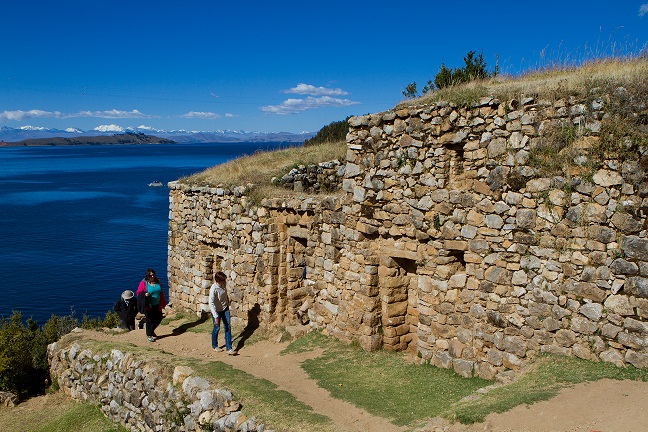
After breakfast, we’ll depart by motorboat for the Isla de la Luna (Island of the Moon), also known as Ajlla Wasi, where the ñustas (princesses or chosen women) lived during the Inca period.
Next, we’ll get back on the boat and head to the southern part of the Isla del Sol (Island of the Sun), where the Inca Empire is said to have been born. Our first visit will be to the Palace of Pillkoqaina, from which we’ll begin a 20-minute walk to the Eco Kalluchi to enjoy a delicious, typical lunch called Apthapi. After lunch, we’ll visit pre-Columbian ruins like the Fountain of the Inca and the Yumani Staircase. From here, you’ll also have a view of the Royal or Andean mountain range.
After this visit, we’ll return to Copacabana and then take private transportation back to the city of La Paz. Upon arrival, you’ll be accommodated at your hotel.
Includes: Private boat from Copacabana to Isla de la Luna and Isla del Sol and back to Copacabana, guide, entrance fees, lunch, private transportation from Copacabana to La Paz, and accommodation at Hotel Ritz or Illampu (Standard Double Room).


Day 13 – La Paz – Airport
At the agreed-upon time, you’ll be transferred to the airport to take your international flight.
Includes: Transfer Out (without guide)
END OF SERVICES